 Face fascinates us. Skin the factor which shows your age. If you look after the skin you will look young always. Get to know your type skin and treat it correctly. Face fascinates us. Skin the factor which shows your age. If you look after the skin you will look young always. Get to know your type skin and treat it correctly.
SKIN types by Fitzpatrick:
Skin Type I - Never Tans, Always Burns (extremely fair skin, blonde hair, blue/green eyes)
Skin Type II - Occasionally tans, usually burns (fair skin, sandy to brown hair, green/brown eyes)
Skin Type III - Often tans, sometimes burns (medium skin, brown hair, brown eyes)
Skin Type IV - Always tans, never burns (olive skin, black hair, dark brown/black eyes)
Skin Type V - Never burns (dark brown skin, black hair, black eyes)
Skin Type VI - Never Burns (black skin, black hair, black eyes)

As a person ages, skin undergoes significant changes i.e The cells divide more slowly, and the inner layer of skin starts to thin.
Fat cells beneath the skin begin to thin as well.
The underlying network of elastin and collagen fibers, which provides scaffolding for the surface layers, loosens and unravels.
Skin loses its elasticity. When pressed, it no longer springs back to its initial position but instead sags and forms furrows.
The sweat- and oil-secreting glands atrophy, depriving the skin of their protective water-lipid emulsions. The skin's ability to retain moisture then diminishes and it becomes dry and scaly.
Frown lines (those between the eyebrows) and crow's feet (lines that radiate from the corners of the eyes) appear to develop because of permanent small muscle contractions. Habitual facial expressions also form characteristic lines.
Gravity exacerbates the situation, contributing to the formation of jowls and drooping eyelids. The ability of the skin to repair itself diminishes with age, so wounds are slower to heal.
Sun Damage (Photoaging) and Wrinkles: The role of the sun cannot be overestimated as the most important cause of prematurely aging skin (called photoaging) and skin cancers. Overall, exposure to ultraviolet (UVA or UVB) radiation emanating from sunlight accounts for about more than 80% of the symptoms of premature skin aging, and most of these effects occur by second decade of the age.
Sunlight consists of ultraviolet (UVA or UVB) radiation, which penetrates the layers of the skin. Both UVA and UVB rays cause damage leading to wrinkles, lower immunity against infection, aging skin disorders, and cancer.
UVB primarily affects the outer skin layers. UVB appears to damage skin cells by directly bombarding the genetic material, the DNA , inside the skin cells.
UVA radiation is composed of longer wavelengths. They penetrate more deeply and efficiently into the inner skin layers and are responsible for tanning and allergic reactions to sunlight. The main damaging effect of UVA appears to be the promotion of the release of oxidants, also called oxygen-free radicals. These unstable particles are the result of many chemical processes in the body. In excess they can damage cell membranes and interact with genetic material. They possibly contribute to the development of wrinkles and skin cancer. The large surface area of the skin makes it a prime target for oxidants.
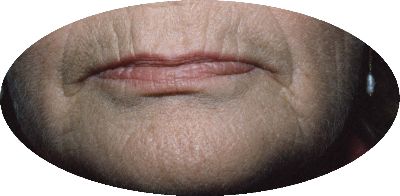
Tanning:The skin protects itself against DNA damage from ultraviolet radiation in different ways: In response to sunlight enzymes in the skin produce melanin, the dark pigment and the source of tanning, which helps shield the sun's rays.
Other enzymes are also released that use regenerated DNA to try to repair damaged skin cells.
Severely damaged cells to literally kill themselves, a process called apoptosis. (Programmed cell death) this Processes Leads to Wrinkles. Sunlight damages collagen fibers (skin structural protein) and causes accumulation of abnormal fibres (the elastin ,causes tissue to stretch).
Repetition of this imperfect skin rebuilding over and over again causes wrinkles.
UV radiation also promotes oxidation, the release of damaging and unstable oxygen-free radicals. Oxidation contributes to wrinkling by degrade connective tissue.
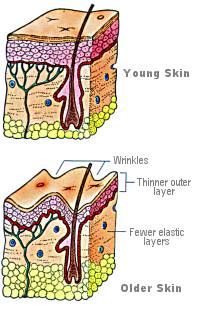 Other Factors hasten the formation of wrinkles: Cigarette smoke produces oxygen-free radicals and is known to accelerate wrinkles and aging skin disorders. Other Factors hasten the formation of wrinkles: Cigarette smoke produces oxygen-free radicals and is known to accelerate wrinkles and aging skin disorders.
Air pollution. Ozone, a common air pollutant, may be a particular problem for the skin. One study reported that it might (deplete the amount of vitamin E anti oxidant) Rapid weight loss can also cause wrinkles by reducing the volume of fat cells can cause the skin to sag.
So if you prevent or reduce the injury to the skin your skin stays younger
Skin Type 1,2 are more likeky to show signs of aging with a minimal insult which are preventable. They also carry a higher risk of developing skin cancers.
|